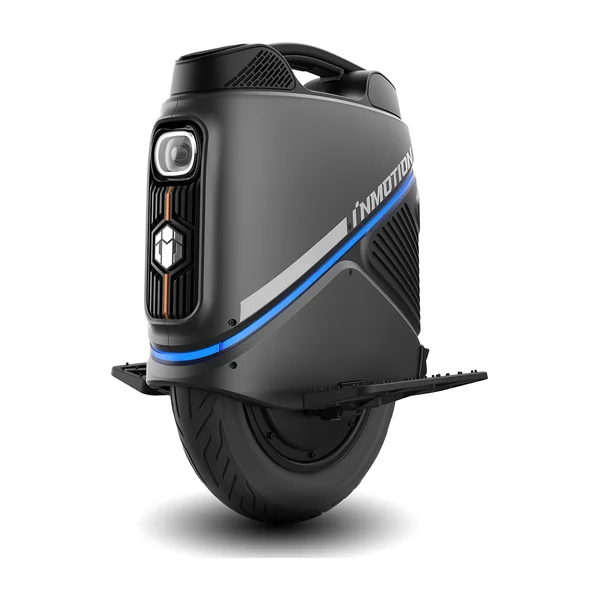
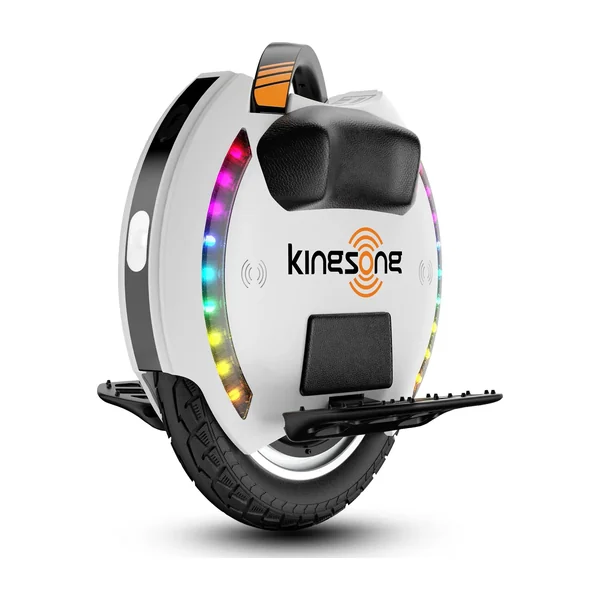
Short answer: you learn an electric unicycle the way you learned a bicycle: badly for a few hours, then suddenly. Put on wrist guards and a helmet, find a fence next to smooth, empty pavement, and practice in 20-minute sessions. Most adults glide unassisted by the third to sixth session and ride with confidence within two or three weeks. A light wheel makes it much easier: the 50.7 lb InMotion V9 ($799) and the 32 lb KingSong 14D Pro ($599) are the two we would start on.
Is an electric unicycle hard to ride?
The first hour is humbling. The wheel balances itself front to back, which is the part that looks impossible; your job is side to side, like on a bicycle. The catch is that a bicycle gives you handlebars to cheat with, and a wheel gives you nothing. So your brain has to learn a new reflex, and brains learn reflexes in short, repeated doses.
That is the good news. Nobody has the talent for it and nobody lacks it. People who practice 20 minutes a day for a week ride. People who try for three hours on one Saturday mostly end up with sore shins and a wheel for sale. Plan for a week of short sessions and you will be fine.

What do you need before the first session?
Three things: protection, a place, and a wheel set up for a learner.
Protection means wrist guards and a helmet, no exceptions. Beginners step off forward and land on their hands. Knee pads are cheap insurance. Our electric unicycle safety gear guide has the details. The place is a smooth, empty surface with something to hold: a fence along a tennis court, a railing beside a quiet parking lot. Grass sounds safer and isn't; it is too hard to roll on.
Then the wheel. Charge it fully, pair the app, and lower the speed limit to about 10 mph so the wheel warns you early. Check the tire pressure. Wrap the shell in an old yoga mat or a cover if scratches bother you, because it will fall over. That is normal. It is also why a first wheel should not cost $3,049.
Days 1 and 2: how do you get on and roll?
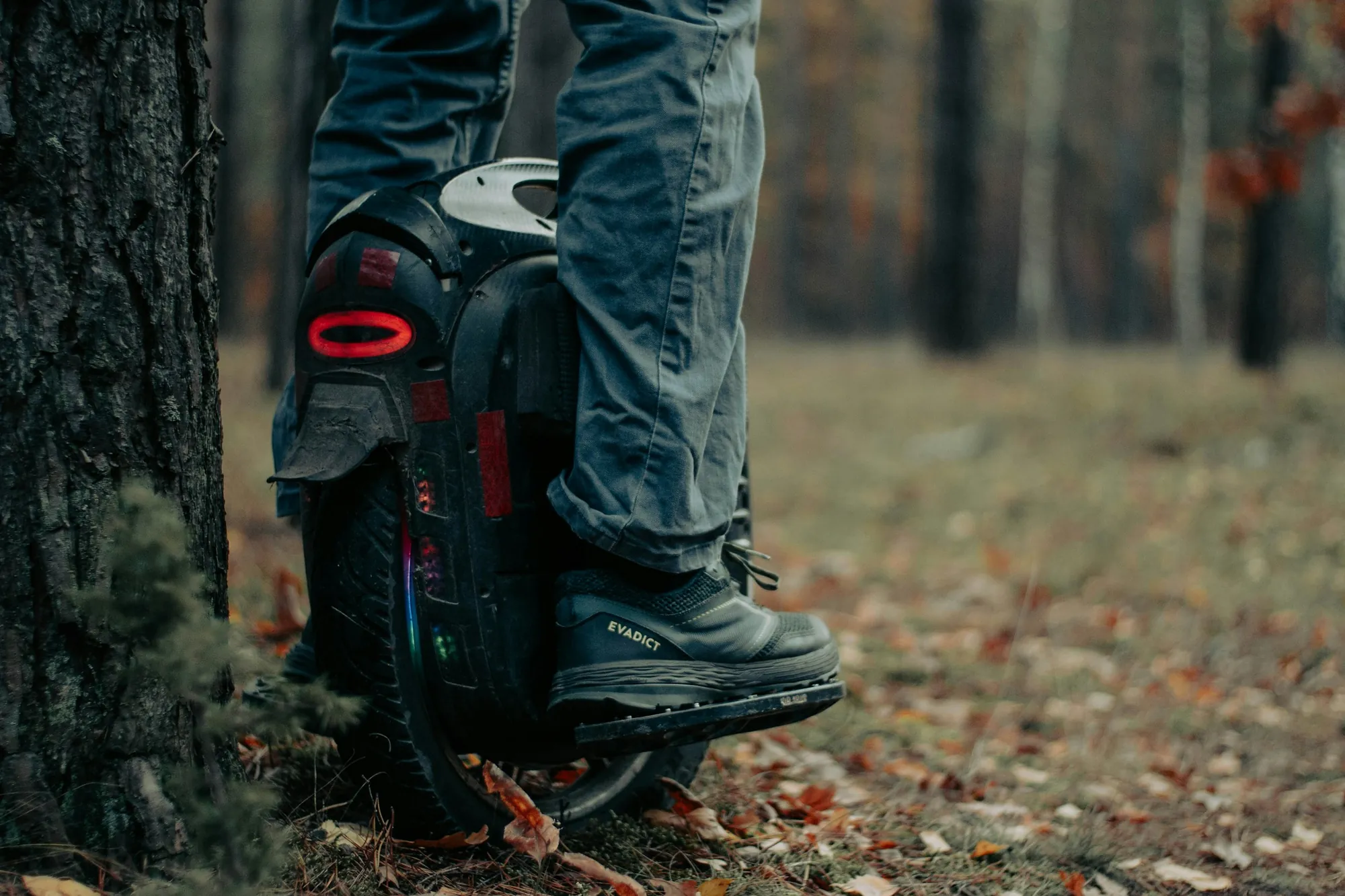
Stand next to the fence with the wheel upright between your feet. Put your stronger foot on its pedal, with your shin resting against the pad on the side of the wheel. That shin contact is your steering; everything else comes later. Now, holding the fence, bring the other foot up. Stand tall, knees soft, and look at the far end of the fence, not at your feet.
Lean forward very slightly from the ankles. The wheel rolls. Lean back, it slows. Go the length of the fence with one hand sliding along it, turn around, come back. Do this until you only touch the fence now and then. On day two, practice the one-foot push: one foot on its pedal, the other pushing the ground like on a kick scooter. Riders call it skating. It teaches your pedal leg to hold the wheel, which is the skill behind every start.
Video: "Learning How To Ride An Electric Unicycle", EUCO - Electric Unicycle Collective on YouTube. Not made by us; chosen because it shows the wheel or the topic clearly.
Days 3 and 4: how do you let go of the fence?
By aiming at something. Stand at the fence, mount, and ride away from it toward a point 20 yards off. You will wobble, your arms will flap, and you will get five yards before stepping off. Walk back, do it again. Speed is your friend here, within reason: like a bicycle, the wheel is far more stable at a jogging pace than at a crawl.
Step off on purpose, too. Slow down, put your weaker foot on the ground first, and let the wheel lean against your other shin. A controlled dismount is what separates a wobble from a fall. By the end of day four most learners are riding 50 to 100 yards in something like a straight line. It will not feel graceful. It does not need to.
Days 5 to 7: how do you turn, stop and start without help?
Turning comes from the hips and the eyes. Look where you want to go, press a little more on that side's pedal, and let your shoulders follow. Start with huge, lazy arcs around the parking lot, then tighten them. Practice both directions; everyone has a bad side.
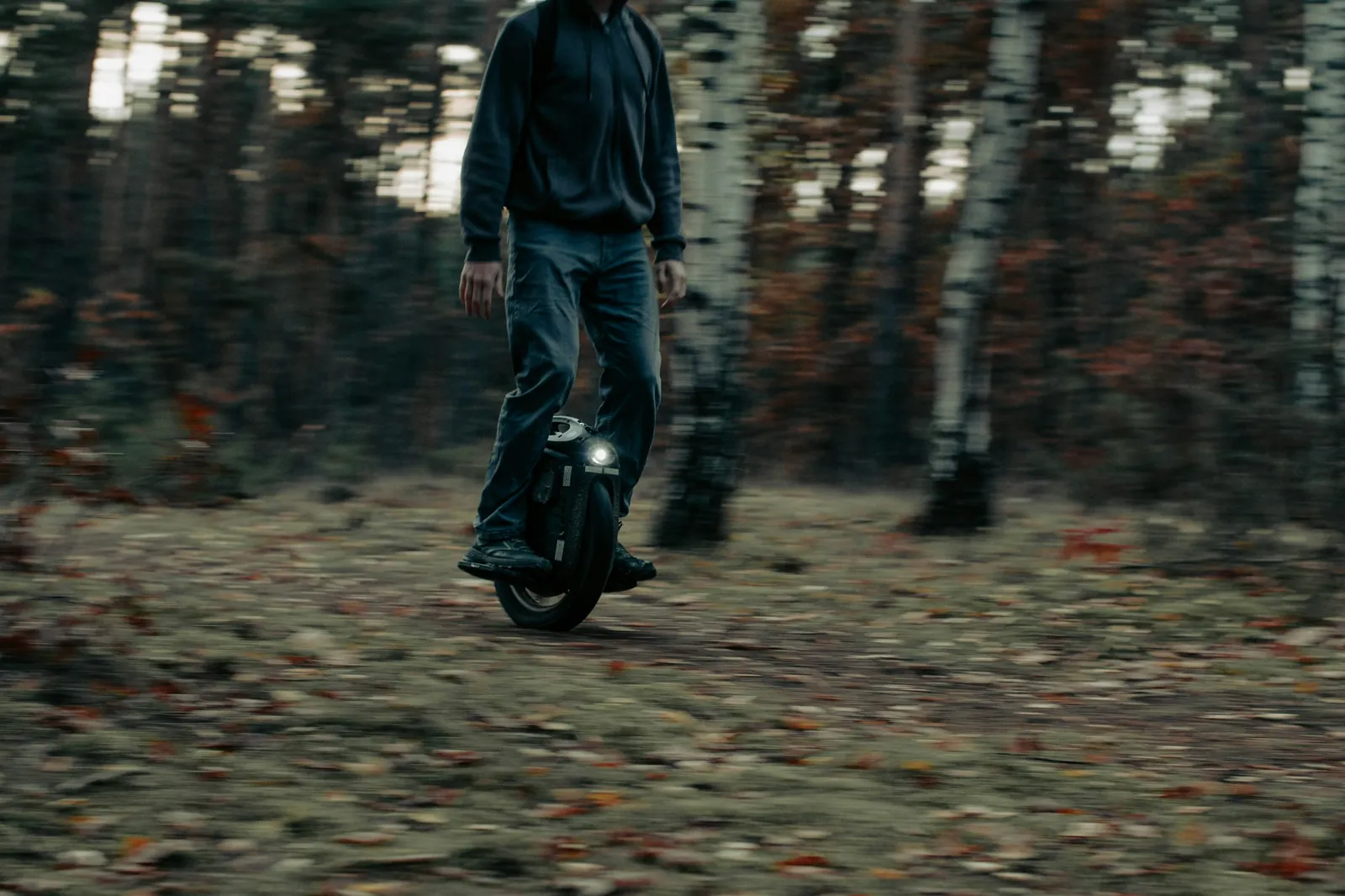
For stopping, bend your knees and sit back slightly, as if into a chair. Practice stopping at a painted line until you can do it within a yard. Then the last piece: starting with no fence. One foot on its pedal, a small push with the other, step up, lean. It will fail ten times and then work forever. Once you can start, turn both ways and stop on a line, you can ride. Move to a quiet bike path and give yourself two more weeks before mixing with traffic. Before that, check where electric unicycles are legal in your city.
Which wheel is easiest to learn on?
A light one with a modest motor. Weight matters more than anything else in week one, because you pick the wheel up dozens of times and catch it with your legs when it tips. Of the 15 wheels we compare, six pass our beginner filter: 66 lb or less, with a claimed top speed of 37 mph at most.
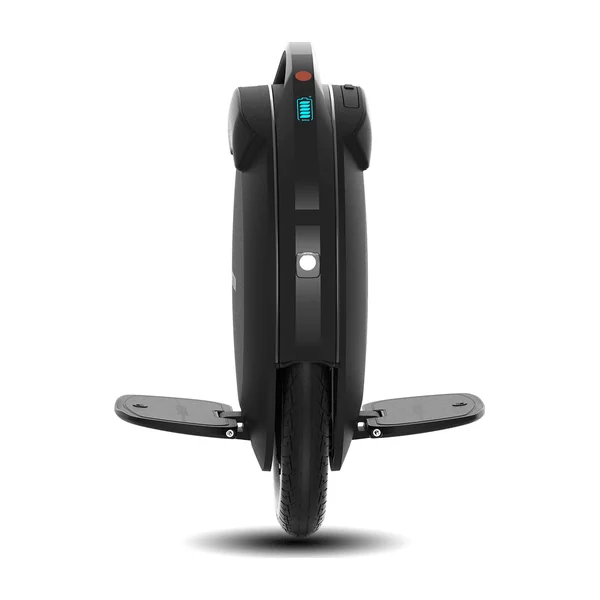
The InMotion V9 leads that list: 50.7 lb, air suspension and a wide tubeless tire that forgives rough pavement, IPX6 and UL certification, for $799. The KingSong 14D Pro is the lightest at 32 lb and tops out at a claimed 18.6 mph, which is no bad thing in your first season. And the InMotion V8S is the cheapest way in at $549. All six are in our ranking of the best electric unicycles for beginners.
What mistakes slow beginners down?
Looking down. Your balance follows your eyes; stare at the pedals and you will steer into them. Pick a tree and ride at it.
Stiff legs come second. Locked knees turn every crack into a jolt and make the wheel twitchy. Third is the marathon session: after 30 minutes you are tired, and tired practice teaches bad habits. Stop while it is still going well. Fourth, over-pumped or under-pumped tires; follow the pressure range printed on the tire and start in the middle of it.
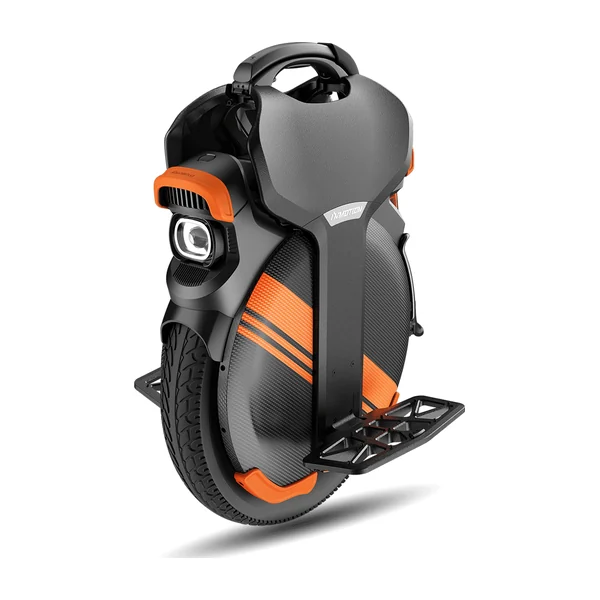
The last one is buying too much wheel. An 80 lb wheel with a 4,000 W motor is harder to mount, harder to catch and more expensive to drop. Learn on something small. If you fall in love with riding, and most people who get through week one do, the big wheels will still be there, and you will know which kind you want. For most riders that next step looks like the InMotion V11Y or the V12S.
The wheels in this guide, side by side
| Wheel | ||||
|---|---|---|---|---|
| Battery | 750 Wh | 420 Wh | 728 Wh | 1,500 Wh |
| Motor | 1,000 W (2,000 W peak) | 800 W (2,400 W peak) | 1,000 W (2,000 W peak) | 2,500 W (7,000 W peak) |
| Suspension | 60 mm travel | No suspension | No suspension | 85 mm travel |
| Weight | 50.7 lb | 32 lb | 35.2 lb | 66 lb |
| Top speed | 28 mph (claimed) | 18.6 mph (claimed) | 21.7 mph (claimed) | 37 mph (claimed) |
| Range | 37 mi (claimed) | 25 mi (claimed) | 47 mi (claimed) | 75 mi (claimed) |
| Water rating | IPX6 | IPX5 | IP54 | IPX6 |
| Sold by | InMotion | KingSong | InMotion | InMotion |
| Where to buy | Check price at InMotion | Check price at KingSong | Check price at InMotion | Check price at InMotion |
✓ marks the best figure of the row. Speed and range are claims. Prices checked November 13, 2026 at the seller named in the table.