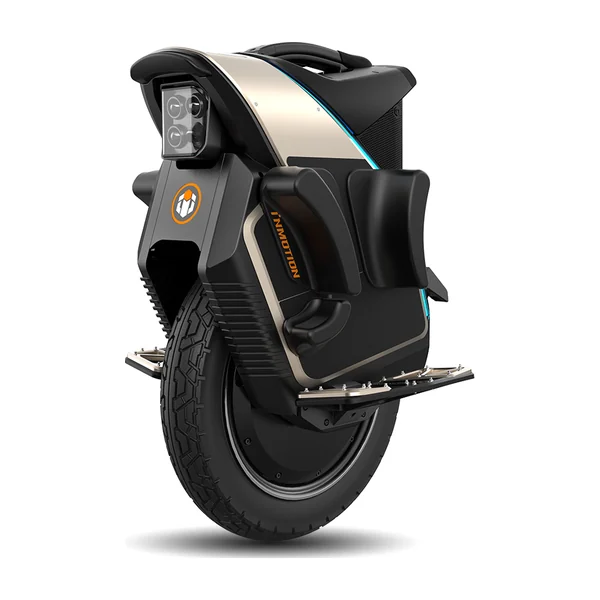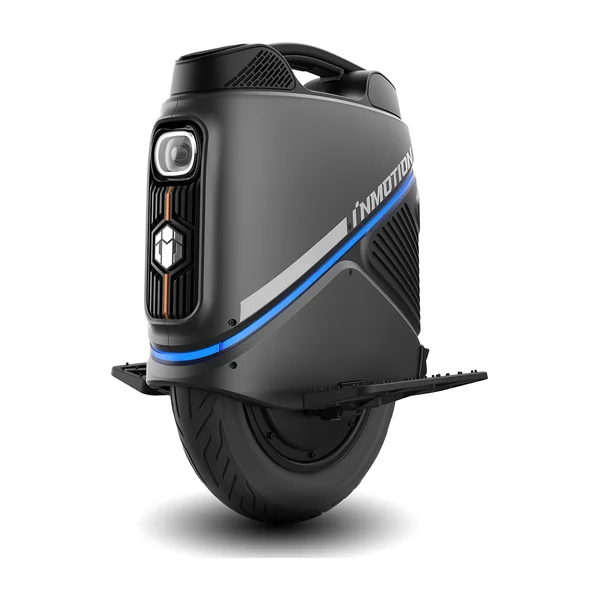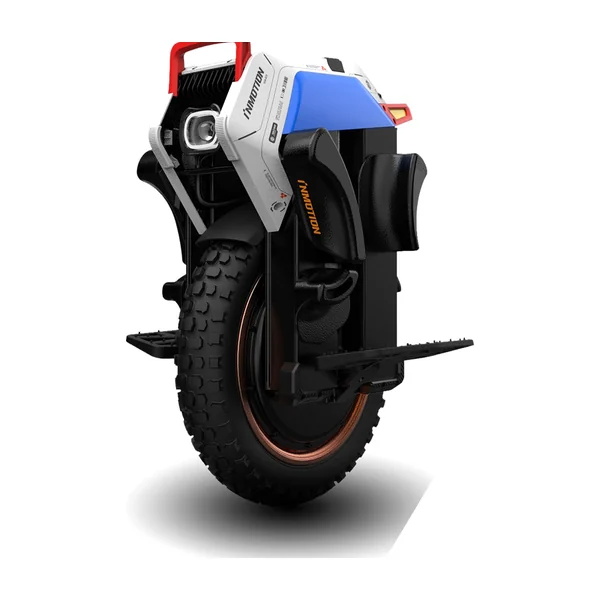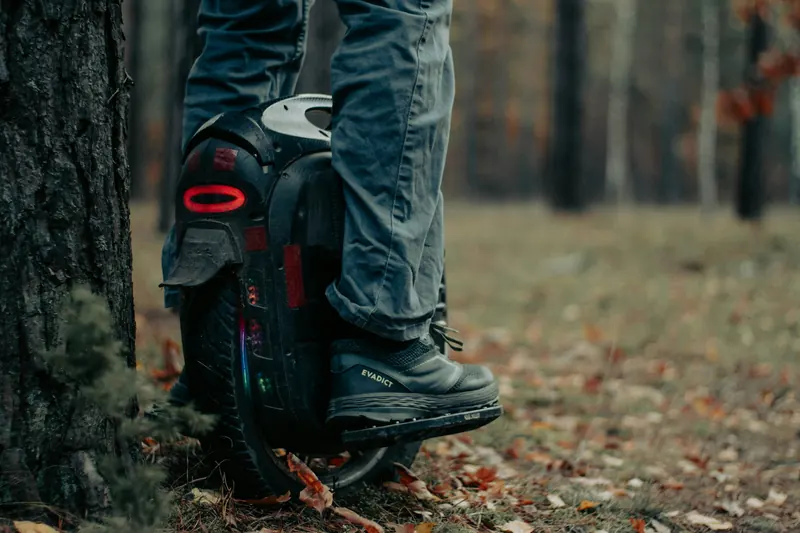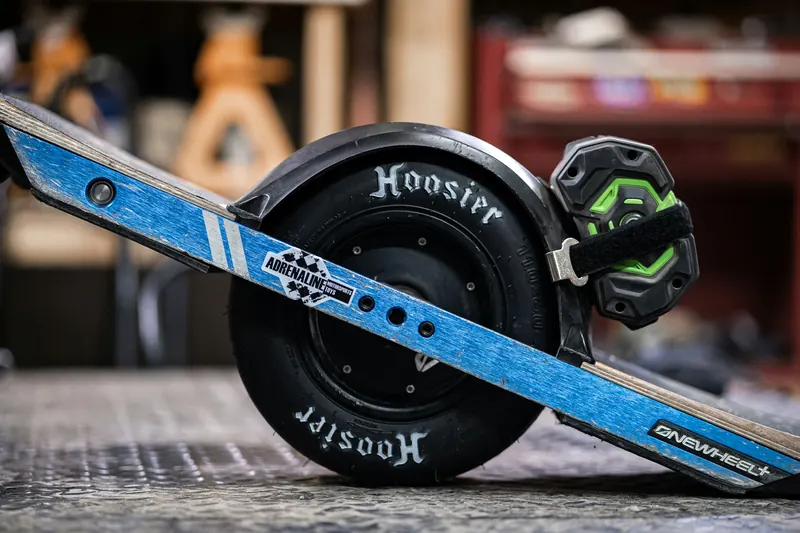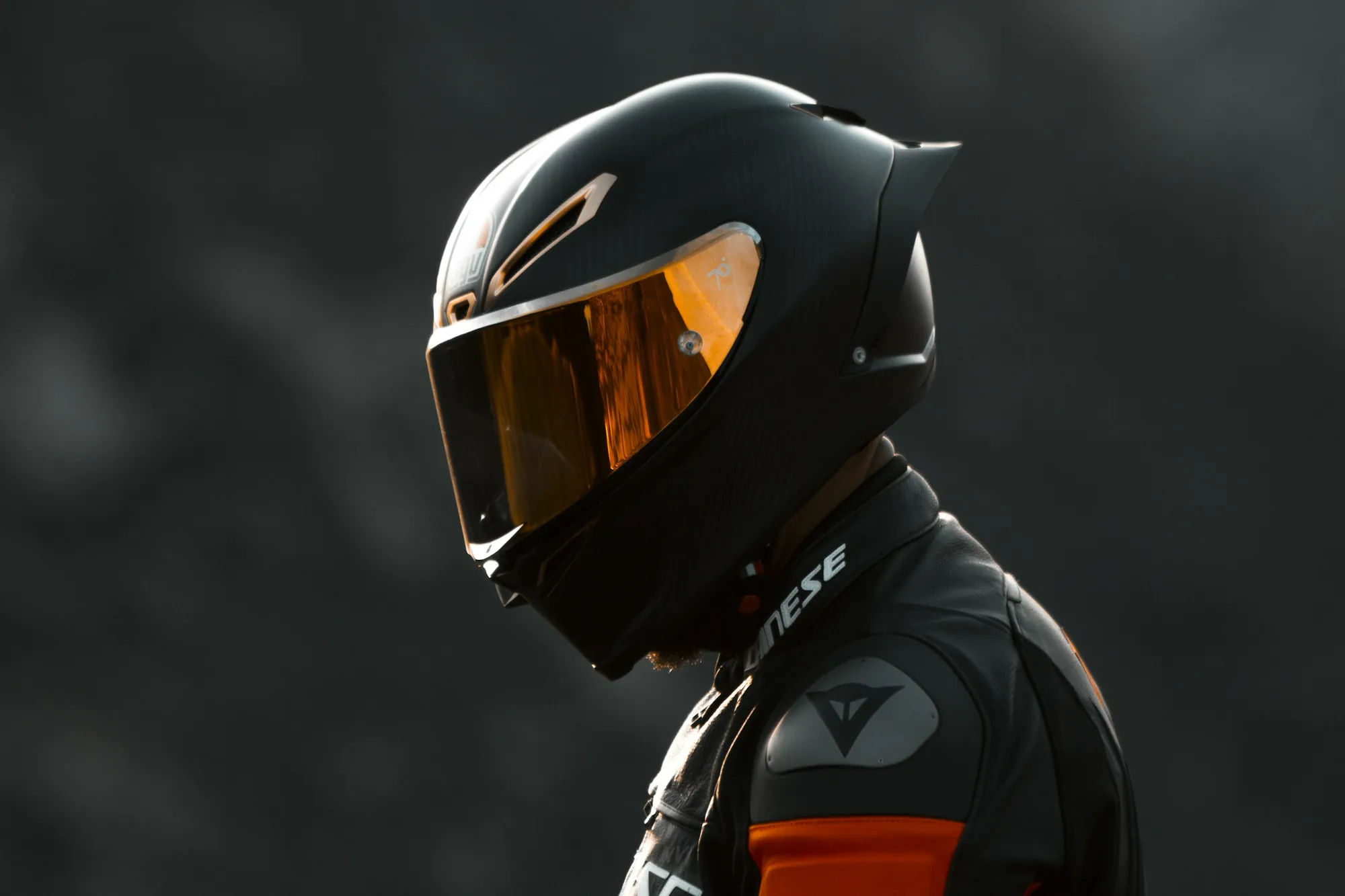
Short answer: on an electric unicycle you fall forward, so protect your hands first: wrist guards on every ride, at any speed. Add a bicycle helmet and knee pads up to about 15 mph, a full-face helmet from 20 mph, and motorcycle-style armor if you ride a big wheel fast. Then learn what a cut-out is, because gear is the second line of defense. The first is never asking the wheel for more power than it has. Wheels that publish their protections help too: the InMotion V12S states IP56, UL certification and a smart BMS.
Why is wrist protection the first thing to buy?
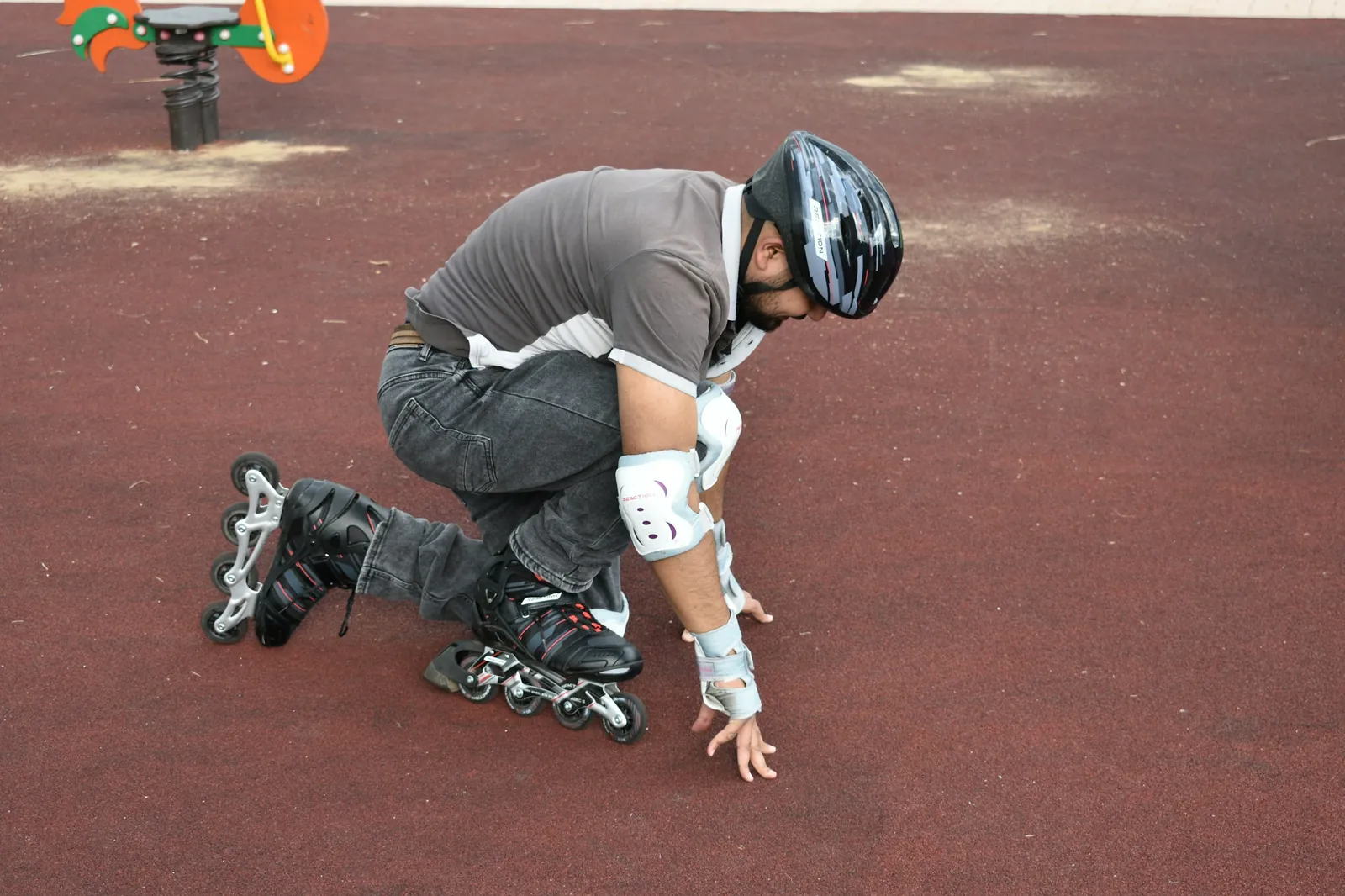
Because of how a wheel throws you. On a bicycle you often go sideways. On a single wheel, when something goes wrong, the wheel stops being under you and you keep going: you land running, or you land on your palms. Hands hit first, then knees, then elbows, and at higher speeds the chin.
So the order of purchase is not the order most people expect. Wrist guards with a rigid splint and a slider plate come first; skate-style guards are the usual choice. Knee pads next. Then the helmet matched to your speed. Gloves alone are not wrist guards: they save skin, not joints.
Which helmet for which speed?
Think in three bands, and be honest about which one you ride in.
- Up to about 15 mph (learning, small wheels, crowded paths): a certified bicycle or skate helmet is the minimum. California's code, for example, requires a bicycle helmet on its "electrically motorized boards" (Vehicle Code 21292).
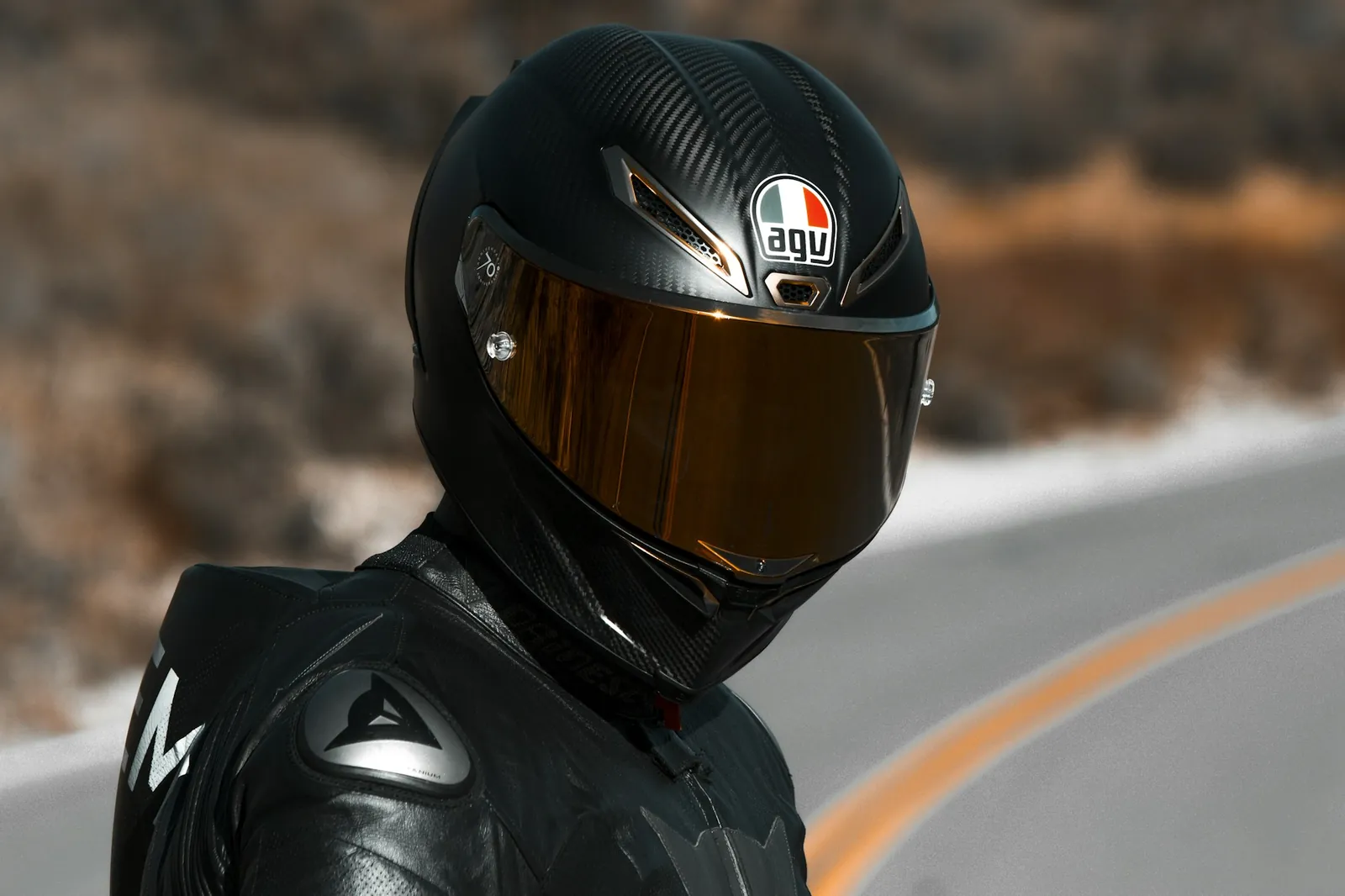
- 20 to 30 mph (most commuter and mid-size wheels): a full-face helmet. Downhill mountain bike helmets are light and well ventilated; the chin bar is the point.
- Above 30 mph (the big wheels): a motorcycle-rated full-face helmet. At these speeds you are a motorcyclist without a motorcycle's brakes.
Fit matters more than brand. A helmet that shifts when you shake your head is the wrong size.
What else do riders wear on fast wheels?
Above 25 mph the answer converges on motorcycle gear, lightened where possible. Knee and shin guards that stay in place when you slide. Elbow pads, or an armored jacket with elbow, shoulder and back protectors built in. Sturdy over-the-ankle shoes, since ankles get clipped by pedals. Some riders add padded shorts.
And be seen. A wheel is low, narrow and silent, and drivers are not looking for you. Use the headlight in daytime, add a light or reflective band up high on your helmet or backpack, and assume at every junction that you are invisible. Brands know the gear question matters: on November 13, 2026 InMotion was adding a full-face helmet it sells at $139 to every V14 Pro order.
Video: "5 SAFETY GEAR MISCONCEPTIONS for EUC Riders", Wrong Way! on YouTube. Not made by us; chosen because it shows the wheel or the topic clearly.
What is a cut-out, and how do you avoid one?
A wheel keeps you upright by accelerating under you. To do that it always needs power in reserve. A cut-out, or overpower, is what happens when you ask for more than it has: accelerating hard near top speed, hitting a bump while leaning forward on a low battery, climbing a steep hill at speed as a heavy rider. The wheel can no longer push back, the pedals dip, and you are on the ground before you understand why.
Wheels warn you before that point with beeps and tilt-back, a gentle lifting of the front of the pedals. The rules that follow are simple. Never ride through an alarm. Leave a wide margin below the claimed top speed, which is why we call it a claim on every page. Go easy below 30% battery, when headroom shrinks. And size the wheel to your weight: a rider near the load limit has less reserve. That is the logic behind our ranking for heavy riders, and behind scoring motor power instead of speed.
What do UL, IP and BMS on a product page protect you from?
They are about the wheel protecting itself, and your home. An IP rating says which water test the wheel passed: IPX5 and IPX6 cover water jets, which in practice means rain and wet roads. UL certification (UL 2272 for these devices) is an independent check of the electrical system. Since September 16, 2023, New York City has required that battery-powered mobility devices sold there be certified by an accredited lab to UL standards, as the city's consumer protection department announced. A smart BMS monitors the cells and reports problems to the app.
Of the 15 wheels we compare, only the InMotion V12S, the InMotion V9 and the KingSong 14D Pro state all three on their pages. Several powerful wheels state only one of them, and two state none. These lines count for 15% of our score for that reason.
How do you charge and store a wheel safely?
The battery is the part of a wheel that deserves respect when it is not moving. New York City's transportation department publishes plain advice for all battery vehicles on its electric bicycles page: use the charger made for your device, keep the battery at room temperature and away from heat, do not charge overnight or unattended, never block your way out of the room, and stop using a battery that smells, swells, leaks or makes odd noises.
Add two habits specific to wheels. After a ride in the rain, let the wheel dry before charging. And after a hard crash, inspect the shell around the battery before you plug it in. A wheel that has taken a big hit near the pack deserves a look from the seller.
Does gear change with the wheel you buy?
It should. A 32 lb wheel with a claimed 18.6 mph top speed asks for wrist guards, knee pads and a good bicycle or skate helmet. A V9 or a V12S, ridden at commuter speeds, calls for a full-face helmet and proper pads. A KingSong F18 or an InMotion P6 means full motorcycle-style kit, every ride.
Put the gear in the budget from the start. If the wheel uses all your money, buy a cheaper wheel: the best electric unicycles under $1,500 leave room for a helmet. And while you are learning, slow is a piece of safety gear too. The plan in how to ride an electric unicycle keeps you at walking pace for the first week on purpose.